
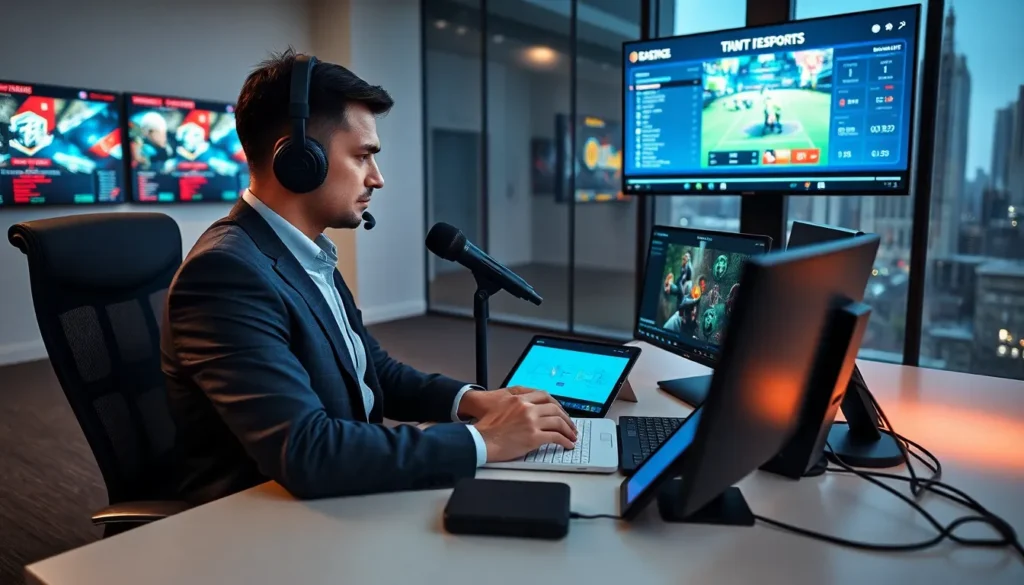
An esports coverage guide helps journalists and content creators report on competitive gaming with accuracy and depth. The industry generated over $1.8 billion in revenue in 2024, and audiences continue to grow across platforms like Twitch, YouTube Gaming, and emerging regional services. Covering esports requires specific skills that blend traditional sports journalism with gaming knowledge and digital fluency.
This guide breaks down the core elements of esports reporting. Readers will learn about the competitive gaming landscape, essential tools for coverage, live event best practices, and how to build a professional network. Whether someone is starting fresh or looking to sharpen existing skills, these strategies offer a clear path forward in esports journalism.
Table of Contents
ToggleKey Takeaways
- An esports coverage guide helps journalists blend traditional sports reporting with gaming knowledge to cover a $1.8 billion industry accurately.
- Understanding game-specific competitive structures, leagues, and regional differences is essential for asking better questions and spotting meaningful trends.
- Use platforms like Liquipedia, HLTV.org, and Oracle’s Elixir to verify statistics and track rosters, tournaments, and match histories.
- Live event coverage requires thorough pre-event research, real-time reporting skills, and respectful interview conduct with players and coaches.
- Building strong relationships with team PR staff, insider sources, and fellow journalists provides access to breaking news and exclusive stories.
- Consistent, accurate coverage over time establishes credibility and leads to better source access and increased readership.
Understanding the Esports Landscape
Esports encompasses professional video game competitions across multiple titles, genres, and regions. The industry includes first-person shooters like Counter-Strike 2 and Valorant, battle royales such as Fortnite and Apex Legends, MOBAs like League of Legends and Dota 2, and fighting games including Street Fighter 6 and Tekken 8. Each game has its own competitive structure, player culture, and audience expectations.
Journalists need to understand how leagues and tournaments operate. Major circuits like the League of Legends Championship Series (LCS), Valorant Champions Tour (VCT), and The International for Dota 2 follow distinct formats. Some run franchised leagues with permanent team slots. Others use open qualification systems where anyone can compete for a spot.
The esports coverage guide approach requires familiarity with team organizations, player contracts, and transfer windows. Organizations like T1, Cloud9, and Fnatic field rosters across multiple games. Player movements between teams generate significant news, similar to traditional sports trades.
Regional differences matter too. North American, European, Chinese, and Korean scenes each have unique storylines, rivalries, and broadcast partners. A reporter covering League of Legends should know that the LCK (Korea) operates differently from the LPL (China) or LEC (Europe). This knowledge helps journalists ask better questions and spot meaningful trends.
Game publishers hold significant power in esports. Riot Games controls all official League of Legends and Valorant competition. Valve takes a hands-off approach with Counter-Strike and Dota 2, allowing third-party organizers to run most events. Understanding these dynamics shapes how journalists approach sources and stories.
Essential Tools and Platforms for Esports Journalism
Effective esports coverage demands the right digital toolkit. Journalists rely on several platforms to track matches, gather statistics, and monitor breaking news.
Match and Statistics Tracking
Sites like Liquipedia serve as comprehensive wikis for esports data. They track tournament brackets, team rosters, match histories, and player profiles across dozens of games. HLTV.org provides detailed statistics for Counter-Strike, including player ratings, head-to-head records, and historical data. Oracle’s Elixir offers similar depth for League of Legends analytics.
These resources help reporters verify facts quickly. An esports coverage guide should emphasize accuracy, getting a player’s previous team wrong or misquoting a statistic damages credibility.
Social Media Monitoring
Twitter (now X) remains the primary breaking news platform for esports. Players, teams, and insiders post roster changes, injury updates, and behind-the-scenes information there first. Journalists should create lists to organize accounts by game, team, or region.
Discord servers also provide direct access to communities. Many teams, tournaments, and media organizations run public or press-specific Discord channels where reporters can ask questions and receive announcements.
Streaming and VOD Platforms
Twitch and YouTube Gaming host most live esports broadcasts. Reporters covering events remotely need reliable access to these streams. VOD (video on demand) archives let journalists review specific plays, interviews, or moments after broadcasts end.
Communication Tools
Professional esports journalism often happens through Discord, Twitter DMs, and email. Building relationships with team PR representatives, tournament organizers, and players requires consistent, professional communication across multiple channels.
Best Practices for Live Event Coverage
Live esports events present unique challenges and opportunities. Whether attending in person or covering remotely, journalists need preparation and adaptability.
Pre-Event Research
Before any tournament, reporters should study the participating teams, recent form, and potential storylines. Who’s the favorite? Which underdog has momentum? Are there grudge matches between former teammates? This background research shapes interview questions and article angles.
An esports coverage guide emphasizes knowing the schedule cold. Major tournaments run long days with multiple matches. Missing a key upset because of poor planning wastes an opportunity.
Real-Time Reporting
Live-tweeting remains standard practice during matches. Short, accurate updates about key plays, player performances, and momentum shifts keep followers engaged. Journalists should balance speed with accuracy, posting wrong information to be first creates problems.
For longer-form coverage, taking detailed notes during matches helps. Timestamps for significant moments make writing post-match recaps faster and more accurate.
Interviews and Press Access
Major events offer press conferences and mixed-zone interviews. Preparing questions in advance ensures reporters use limited time well. Good questions are specific, reference recent performance, and invite detailed answers rather than yes/no responses.
Remember that players and coaches have just competed. They may be emotional after a loss or exhausted after a long match. Respectful, professional conduct builds long-term relationships.
Remote Coverage Considerations
Many journalists cover esports entirely online. This approach requires excellent multitasking, watching streams, monitoring social media, and writing simultaneously. Remote reporters should identify reliable sources for quotes since they can’t conduct in-person interviews.
Building Your Esports Reporting Network
Strong professional relationships separate good esports journalists from great ones. Sources, peers, and industry contacts provide access to stories that public information can’t reveal.
Connecting with Teams and Players
Most esports organizations have dedicated PR or media relations staff. Reaching out professionally through official channels establishes initial contact. Reporters should introduce themselves, explain their outlet or platform, and request to be added to press lists.
Building trust takes time. Accurate, fair coverage of a team or player creates goodwill. Misquoting someone or publishing inaccurate information damages relationships quickly.
Developing Insider Sources
Breaking news in esports often comes from unnamed sources. Team managers, coaches, players, and organization staff sometimes share information before official announcements. Protecting source confidentiality is essential, burning a source ends that relationship permanently.
This esports coverage guide notes that insider reporting requires ethical judgment. Confirming information with multiple sources reduces the risk of publishing false stories.
Networking with Other Journalists
Esports journalism communities exist on Twitter, Discord, and at in-person events. Fellow reporters can offer advice, share leads (when appropriate), and provide moral support during difficult stories. Competition exists, but collaboration often benefits everyone.
Engaging with the Community
Esports fans are passionate and knowledgeable. Engaging respectfully with readers through social media, Reddit, or comment sections builds audience loyalty. Community members sometimes tip reporters to stories or provide useful context that improves coverage.
Consistent presence matters. Journalists who cover a game or scene regularly become recognized voices. This recognition leads to better source access and increased readership over time.