
Esports coverage techniques have transformed how millions of viewers experience competitive gaming. The industry generated over $1.8 billion in 2024, and professional broadcasts now rival traditional sports in production quality. Whether a tournament features League of Legends, Counter-Strike 2, or Valorant, the methods used to capture and present gameplay directly shape audience engagement.
This guide breaks down the core techniques that make esports broadcasts compelling. From camera work to commentary, each element plays a specific role in translating fast-paced digital action into watchable content. Understanding these techniques helps producers, aspiring casters, and fans appreciate the craft behind every stream.
Table of Contents
ToggleKey Takeaways
- Esports coverage techniques rely on skilled observers who anticipate action and position cameras before plays happen, keeping viewers engaged.
- The casting duo model—pairing play-by-play energy with color analyst insight—remains essential for translating gameplay into compelling storytelling.
- Directors use the ‘reaction sandwich’ technique (play, winner reaction, replay, loser reaction) to build emotional weight after major moments.
- Real-time statistics and API integrations help casual viewers understand competitive context instantly through visual graphics.
- AI-assisted production tools now support observer work and highlight generation, but human judgment still excels at capturing creative plays and emotional moments.
- Interactive viewing options let audiences choose player perspectives and toggle overlays, representing the next evolution in esports coverage techniques.
Understanding the Esports Broadcast Landscape
The esports broadcast landscape differs significantly from traditional sports coverage. Games happen inside digital environments, which means producers have access to every angle, every stat, and every player perspective simultaneously. This creates both opportunities and challenges.
Major tournaments like The International (Dota 2) or the League of Legends World Championship employ production teams of 50+ people. These teams manage multiple streams, replay systems, and real-time graphics. Smaller events might run with crews of five to ten, but the core esports coverage techniques remain consistent.
Platform Considerations
Twitch dominates live esports streaming, holding roughly 65% of viewership hours. YouTube Gaming follows as a strong second, particularly for archived content. Each platform has technical requirements that affect production choices:
- Bitrate limits determine video quality ceilings
- Chat integration influences viewer interaction design
- Monetization tools shape sponsorship placement
Producers must optimize their esports coverage techniques for each platform’s strengths. A Twitch broadcast might lean into chat engagement, while a YouTube premiere could focus on higher resolution output.
Audience Expectations
Modern esports viewers expect professional quality. They’ve watched thousands of hours of content and can spot amateur production instantly. Smooth transitions, clear audio mixing, and informative overlays aren’t optional, they’re baseline requirements.
Essential Production and Camera Techniques
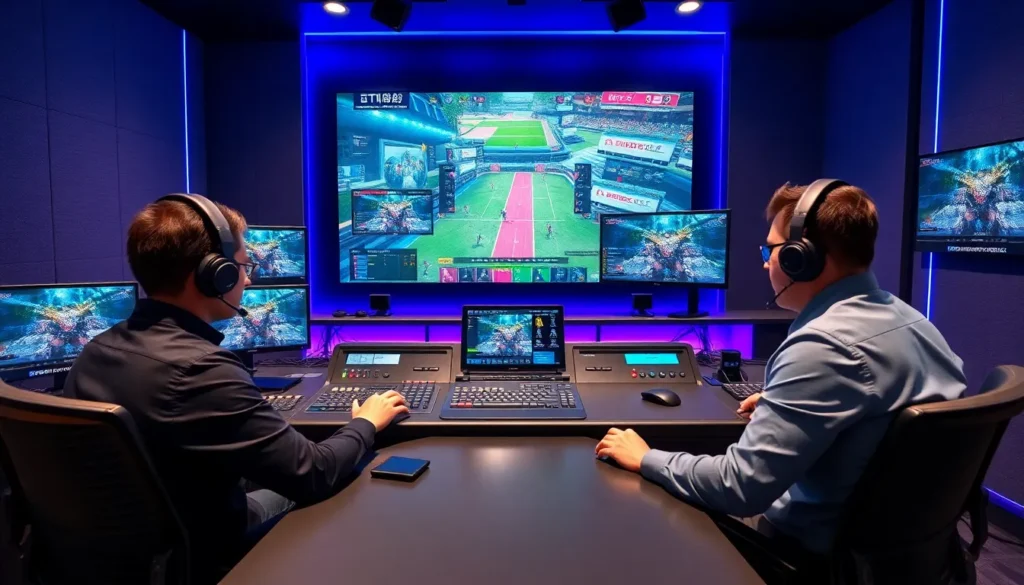
Esports coverage techniques for camera work operate on different principles than physical sports. The “camera” is actually an observer client within the game itself, controlled by dedicated operators.
Observer Systems
Most competitive games include built-in observer tools. These allow operators to:
- Switch between player perspectives
- Use free-floating cameras for cinematic shots
- Access overhead or map-wide views
- Trigger slow-motion replays
Skilled observers anticipate action before it happens. In a game like CS2, an experienced observer watches the minimap and positions their view where fights will likely occur. This predictive approach keeps viewers engaged rather than constantly catching up to missed action.
The Director’s Role
A broadcast director coordinates between multiple observers, replay operators, and graphics technicians. They call shots in real-time, deciding when to cut between player cams, show replays, or display statistics. Good directors develop rhythm, they know when to let action breathe and when to rapid-cut for intensity.
Effective esports coverage techniques include the “reaction sandwich.” After a major play, directors show:
- The play itself
- The winning player’s reaction (facecam)
- A replay from a new angle
- The losing player’s reaction
This sequence builds emotional weight and gives viewers time to process what happened.
Player Cameras and Stage Production
LAN events add another layer: physical cameras capturing player reactions. These shots humanize the competition and create memorable moments. The best productions sync player cams perfectly with in-game action, cutting to a player’s face right as they make a clutch play.
Commentary and Storytelling Strategies
Commentary drives the narrative of esports broadcasts. Without it, viewers see only gameplay. With strong commentary, they experience drama, context, and meaning.
The Casting Duo
Most esports coverage techniques pair two commentators with distinct roles:
- Play-by-play caster: Describes action as it happens, maintains energy, guides viewer attention
- Color analyst: Provides strategic insight, explains decisions, fills slower moments with context
This pairing works because it covers both immediate and analytical needs. Play-by-play keeps pace with fast action, while analysis helps viewers understand why plays matter.
Building Narratives
Great casters prepare storylines before matches begin. They research:
- Head-to-head records between teams
- Individual player histories and rivalries
- Recent form and performance trends
- Personal stories (comebacks, roster changes, etc.)
These narratives transform matches from random games into chapters of ongoing stories. When a caster mentions that a player is facing their former team for the first time, suddenly every kill carries extra weight.
Energy Management
Sustaining energy across a five-hour broadcast requires pacing. Experienced casters save their biggest reactions for truly significant moments. If everything sounds exciting, nothing does. The contrast between calm analysis and explosive play-by-play makes highlights feel special.
Effective esports coverage techniques also include knowing when to be quiet. After a dramatic moment, silence lets the action speak. Viewers don’t always need commentary, sometimes they need space to react.
Leveraging Technology for Enhanced Coverage
Technology continues to expand what’s possible in esports broadcasts. Modern esports coverage techniques incorporate tools that didn’t exist five years ago.
Real-Time Statistics and Graphics
API integrations pull live data directly from games. Broadcasts can display:
- Damage dealt per player
- Economic advantages (in tactical shooters)
- Win probability calculations
- Historical comparisons to previous matches
These graphics help casual viewers understand competitive context. A new viewer might not grasp why a team is winning, but a gold graph showing a 10,000-unit lead communicates dominance instantly.
AI-Assisted Production
Artificial intelligence now assists with observer work in some broadcasts. AI systems can track action across the map and suggest optimal camera positions. Some tournaments use AI to auto-generate highlight clips within minutes of matches ending.
But, human operators still outperform AI in predicting creative plays and capturing emotional moments. The best esports coverage techniques blend automated assistance with human judgment.
Virtual Production Elements
Augmented reality graphics have entered esports broadcasts. Teams can display 3D models of in-game characters on physical stages, create virtual environments behind analyst desks, or animate statistics in three-dimensional space.
These elements increase production value but require significant technical investment. Major tournaments justify the cost: smaller events focus on fundamentals first.
Interactive Viewing
Some broadcasts now offer viewer control. Platforms allow audiences to:
- Choose which player’s perspective to watch
- Toggle statistics overlays on/off
- Select audio tracks (different language casters)
Interactive esports coverage techniques shift some production decisions to viewers themselves. This personalization increases engagement but adds technical complexity.