
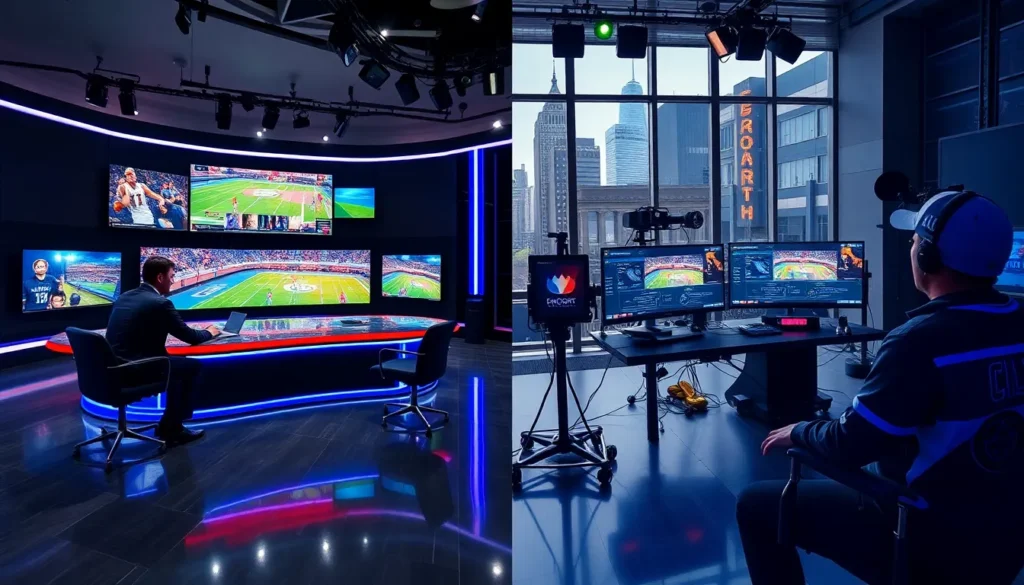
Esports coverage vs traditional sports coverage reveals two distinct approaches to broadcasting competitive events. Both aim to inform and entertain audiences, but they differ in platforms, production styles, and community engagement. Traditional sports rely on television networks and established media outlets. Esports coverage thrives on streaming platforms and digital-first content. Understanding these differences helps fans, content creators, and industry professionals appreciate how each medium serves its audience. This article breaks down the key distinctions between esports coverage and traditional sports media.
Table of Contents
ToggleKey Takeaways
- Esports coverage vs traditional sports reveals fundamental differences in platforms, with esports thriving on free streaming services like Twitch while traditional sports rely on cable TV and subscriptions.
- Esports broadcasts integrate real-time audience interaction through live chat and voting, creating a two-way experience that traditional sports cannot match.
- Casters in esports often come from gaming communities and professional play, giving coverage an authentic insider perspective that resonates with audiences.
- Esports coverage vs traditional sports shows greater accessibility, with most major events streaming free globally without regional blackouts or licensing restrictions.
- Production styles differ significantly—esports relies on specialized observers controlling in-game cameras, a role with no equivalent in traditional sports broadcasting.
- Esports organizations encourage fan-created content and co-streams, while traditional sports leagues typically protect broadcast rights more aggressively.
How Esports Coverage Differs From Traditional Sports Media
Traditional sports media follows a broadcast model built over decades. Networks like ESPN, NBC Sports, and Fox Sports hold exclusive rights to major events. They schedule programming around prime-time slots and commercial breaks. Commentators work from studios or press boxes, delivering play-by-play analysis to passive viewers.
Esports coverage vs traditional sports media shows a fundamental shift in delivery. Esports broadcasts happen primarily online. Platforms like Twitch, YouTube Gaming, and streaming services host live events without traditional TV constraints. This setup allows for longer broadcasts, fewer interruptions, and direct interaction with viewers.
The talent pool differs significantly. Traditional sports announcers often come from journalism or broadcasting backgrounds. Esports casters frequently emerge from gaming communities. Many were professional players or content creators before moving behind the microphone. This gives esports coverage an insider perspective that resonates with gaming audiences.
Production teams also operate differently. Traditional sports broadcasts use standardized camera angles and replay systems. Esports coverage must capture in-game action, player reactions, and live statistics simultaneously. Observers, specialized camera operators who control in-game views, play a critical role in esports production. No equivalent exists in traditional sports.
The relationship with teams and organizations varies too. Traditional sports coverage maintains clear separation between media and athletes. Esports coverage often blurs these lines. Teams run their own content channels, and players stream directly to fans. This creates competition and collaboration between official broadcasts and independent content.
Platform and Streaming Approaches
When comparing esports coverage vs traditional sports platforms, the differences become clear immediately. Traditional sports still depend heavily on cable television. While streaming options exist through services like Peacock and ESPN+, live broadcasts typically prioritize TV audiences first.
Esports coverage built its foundation on streaming platforms. Twitch dominates the space, followed by YouTube Gaming and regional platforms like Huya and Douyu in China. These platforms offer features traditional broadcasts cannot match. Viewers watch for free, access chat functions, and choose from multiple streams or perspectives.
Accessibility marks a major distinction. Traditional sports coverage often requires cable subscriptions or pay-per-view purchases. Most major esports events stream free of charge. This open access model drives higher viewer engagement and broader reach, especially among younger demographics.
The streaming approach also affects scheduling. Traditional sports fit into broadcast windows dictated by network programming. Esports events can run as long as needed. A League of Legends tournament match might last 30 minutes or stretch past an hour, the broadcast adapts accordingly.
Esports coverage vs traditional sports also differs in geographic reach. Traditional sports broadcasts face regional blackouts and licensing restrictions. Esports streams reach global audiences without these barriers. A viewer in Brazil can watch the same Korean League of Legends broadcast as someone in Germany, often with localized commentary options.
Audience Engagement and Community Interaction
Community interaction represents perhaps the starkest contrast in esports coverage vs traditional sports media. Traditional broadcasts flow one direction, from network to viewer. Fans watch, react, and discuss elsewhere.
Esports coverage integrates audience participation directly into broadcasts. Live chat scrolls alongside gameplay. Viewers vote on MVP selections, influence camera angles, and communicate with hosts in real time. This two-way conversation shapes the viewing experience.
Social media plays different roles in each space. Traditional sports coverage treats social platforms as promotional tools. Teams and networks post highlights and updates to drive viewers back to broadcasts. Esports coverage treats social media as an extension of the broadcast itself. Memes, clips, and community reactions become part of the content ecosystem.
The concept of “watch parties” illustrates this gap. When traditional sports fans gather to watch games, they interact with each other, not the broadcast. Esports co-streams allow popular streamers to broadcast official matches with their own commentary. Viewers choose between official coverage and their favorite content creator’s perspective.
Esports coverage vs traditional sports also shows different approaches to fan content. Traditional sports leagues protect broadcast rights aggressively. Esports organizations generally encourage fan-created content. Highlight clips, analysis videos, and reaction content spread freely. This generates ongoing conversation between major events.
Direct player access further separates these worlds. Traditional athletes interact with media through press conferences and scheduled interviews. Esports professionals stream regularly, answer fan questions live, and engage through Discord servers. This accessibility builds stronger personal connections between competitors and audiences.
Content Formats and Production Styles
Production styles in esports coverage vs traditional sports reflect their different origins. Traditional sports broadcasts follow proven formulas. Pre-game shows, halftime analysis, and post-game wrap-ups structure the content. Graphics packages and replay systems look polished and consistent across networks.
Esports coverage experiments more freely with formats. Desk segments might feature comedy sketches or player roasts. Analysts break down strategy using screen-sharing tools and live demonstrations. The tone shifts between professional and casual depending on the event and audience.
Content length varies dramatically. Traditional sports coverage produces tight highlight packages and structured segments. Esports coverage includes hour-long post-match discussions, documentary-style player profiles, and “vod reviews” where analysts examine full matches in detail.
Visual presentation differs based on technical requirements. Traditional sports cameras capture physical action from fixed positions. Esports coverage must balance in-game footage, player cameras, crowd shots, and overlay information. The observer role, controlling the in-game camera, requires split-second decisions about what viewers see.
Esports coverage vs traditional sports production also shows different budget realities. Major sports networks invest billions in broadcast rights and production facilities. Esports productions operate with smaller budgets but achieve impressive results through digital tools and creative solutions. A single observer with strong game knowledge can provide better coverage than an expensive camera rig.
The archive value of content differs too. Traditional sports highlight reels focus on memorable plays. Esports coverage generates educational content, strategy guides, patch analysis, and meta discussions that remain relevant for months.