
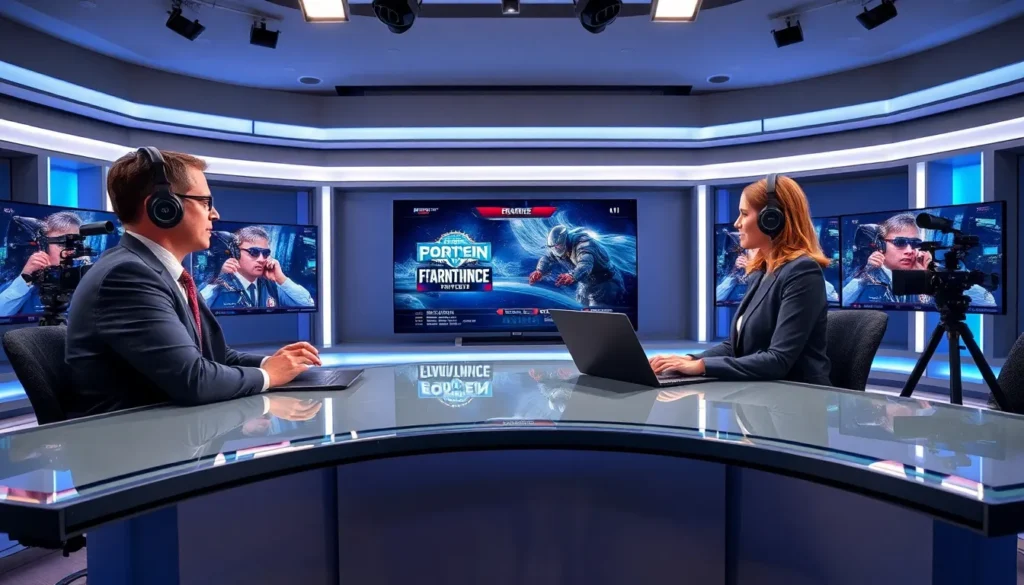
Esports coverage has become a major force in modern media. Millions of fans worldwide follow competitive gaming through broadcasts, articles, podcasts, and social media. But what exactly does esports coverage include, and why does it matter?
This guide explains the different types of esports coverage, where fans can find it, and who creates it. Whether someone is new to competitive gaming or a longtime viewer, understanding how esports media works adds depth to the spectator experience.
Table of Contents
ToggleKey Takeaways
- Esports coverage includes live broadcasts, match recaps, player interviews, news articles, podcasts, and expert analysis of competitive gaming.
- Major platforms like Twitch and YouTube Gaming host most live esports coverage, while dedicated news sites provide daily written content.
- Professional esports coverage now rivals traditional sports broadcasting with multi-camera production, commentary teams, and analyst desks.
- Esports journalists, commentators, and analysts work together to inform fans, break down strategies, and build compelling narratives around players and teams.
- Fans can find quality esports coverage through streaming platforms, dedicated news outlets, game-specific communities, and mainstream sports networks like ESPN.
- The esports industry’s growth to over $1.8 billion in revenue has driven demand for professional, high-quality media content.
Understanding Esports Coverage
Esports coverage refers to all media content that reports on, analyzes, or broadcasts competitive video gaming. This includes live tournament streams, match recaps, player interviews, team news, and expert commentary. Think of it like traditional sports journalism, but focused on games like League of Legends, Counter-Strike, Valorant, and Dota 2.
The esports industry generated over $1.8 billion in revenue in 2024, according to industry reports. That growth has created demand for professional media coverage. Fans want more than just watching matches. They want context, stories, predictions, and behind-the-scenes access.
Esports coverage serves multiple purposes. It informs viewers about upcoming tournaments and results. It provides analysis that helps fans understand strategies and player performance. It also builds narratives around teams and players, creating emotional investment similar to what traditional sports fans experience.
Professional esports coverage has evolved significantly over the past decade. Early competitive gaming relied on grassroots forums and amateur streams. Today, dedicated media outlets, major broadcasting networks, and streaming platforms all produce high-quality esports content.
Types of Esports Coverage
Esports coverage takes several distinct forms. Each type serves different audience needs and consumption habits.
Live Event Broadcasting
Live broadcasting forms the backbone of esports coverage. Major tournaments like The International, the League of Legends World Championship, and the Valorant Champions Tour attract millions of concurrent viewers.
These broadcasts feature professional production teams, multiple camera angles, instant replays, and real-time graphics. Commentary teams provide play-by-play and color analysis during matches. The production quality now rivals traditional sports broadcasting.
Platforms like Twitch, YouTube Gaming, and regional streaming services host most live esports coverage. Some events also air on television networks. ESPN, for example, has broadcast major esports tournaments to mainstream audiences.
Live esports coverage often includes pre-show content, analyst desks between matches, and post-game interviews. This extended programming gives viewers a complete experience beyond just watching the gameplay.
News and Analysis
Written and video content provides ongoing esports coverage between major events. News outlets report on roster changes, tournament announcements, player controversies, and industry developments.
Analysis content goes deeper. Expert writers and former players break down match strategies, team compositions, and meta shifts. This type of esports coverage helps fans understand why teams win or lose, not just the final scores.
Podcasts have become another popular format for esports coverage. Shows feature interviews with players and coaches, roundtable discussions, and predictions for upcoming matches. Fans can consume this content during commutes or other activities.
Social media also plays a huge role in esports coverage distribution. Teams, players, and journalists share updates, clips, and reactions across Twitter, Instagram, TikTok, and other platforms.
Where to Find Esports Coverage
Finding quality esports coverage has never been easier. Multiple platforms and outlets compete for audience attention.
Twitch remains the dominant platform for live esports coverage. Most major tournaments stream there, and individual players also broadcast their practice sessions. YouTube Gaming offers similar live content plus an extensive archive of past matches and highlight videos.
Dedicated esports news sites provide written coverage. Outlets like Dot Esports, Dexerto, and The Score Esports publish daily articles on multiple game titles. These sites cover breaking news, feature stories, and match analysis.
Game-specific communities offer specialized esports coverage. Subreddits, Discord servers, and fan sites focus on particular titles. This community-driven content often includes deeper analysis and discussion than general esports outlets provide.
Mainstream sports networks have increased their esports coverage in recent years. ESPN operates a dedicated esports section on its website and app. Other traditional media outlets cover major esports stories as competitive gaming gains mainstream recognition.
Podcasts and YouTube channels round out the esports coverage landscape. Content creators produce everything from quick news updates to hour-long deep dives into specific games or scenes.
The Role of Esports Journalists and Commentators
People power esports coverage. Journalists, commentators, analysts, and content creators all contribute to the media ecosystem.
Esports journalists investigate stories, break news, and conduct interviews. They hold organizations accountable and give fans accurate information. Respected journalists have built significant followings by consistently delivering reliable esports coverage.
Commentators, often called casters, bring live matches to life. Play-by-play casters describe the action in real time. Color commentators provide analysis and context between plays. The best casting duos develop chemistry that enhances viewer enjoyment.
Analysts appear on broadcast desks to break down strategies and predict outcomes. Many analysts are former professional players who bring firsthand competitive experience to their esports coverage.
Content creators occupy a unique space. They produce esports coverage that ranges from serious analysis to entertainment-focused content. Some focus on educational breakdowns. Others create highlight compilations, reaction videos, or comedy content related to competitive gaming.
The career path into esports coverage varies widely. Some professionals come from traditional journalism backgrounds. Others started as players or community members who developed media skills over time. This diversity brings different perspectives to competitive gaming media.